This guest post comes from stephen b., a Ph.D. Student in Religious Studies at the University of Virginia. He writes about religion in public life, secularism, modernity, and the Progressive Era.He also hosts the Mormon Studies podcast Scholars & Saints.
While historians can do their work largely not reliant on “high theory,” theory can’t do its work without the contingency and specificity of history. In her book The Politics of Piety: The Islamic Revival and the Feminist Subject, Saba Mahmood talks about the embodied religious practices of Egyptian Muslim women in the piety movement of the Islamic Revival during the mid-1990s. By analyzing the conditions under which these women became subjects through embodied practices such as arguing, reading, memorizing, teaching, and so forth, Mahmood illustrated concretely why theories of agency and subject formation in the work of Judith Butler are problematic in the ways that they epistemologically exclude possibilities of agency that do not center on the feminist/liberal assumption that freedom is constitutive of agency (Nor do they acknowledge the need to ground, as Mahmood says, “a theory” in concrete examples).
Theme: Landscape, Art and Religion: The Intermountain West and the World
For its 57th Annual Conference in Logan, Utah, the Mormon History Association has joined forces with the Center for Latter-day Saint Arts to create a program that we hope will bring an art element into the sessions. We have selected a theme which we believe will evoke provocative historical papers and also suggest art topics, meaning all the arts: literature, visual art, music, film, theater, architecture, design, and so forth.
The theme, “Landscape, Art, and Religion: The Intermountain West and the World,” grows out of the assumption that the natural environment shapes culture and society. Social organization, the economy, and artistic expression are formed and directed by the landscapes in which they rest. During the first century of Mormon settlement, the intermountain landscape influenced many aspects of human life In the twentieth century, the Intermountain West remained the heartland of Latter-day Saint culture, but church members had to adapt to other landscapes, cultural and physical, as Mormonism expanded around the globe.
The program committee invites scholars young and old, local and global, to investigate all aspects of this theme. Because of the collaboration with the Center for Latter-day Saint Arts, we hope many will take the occasion to explore artistic dimensions of society and culture. How are the riches and the tensions of Mormonism’s natural settings manifest in literature, music, the visual arts, film, and all the other art disciplines?
As a spur to thought, here are possible session topics that stem from the theme:
The meaning of valley in Mormon culture
From Promised Valley to Great Basin Kingdom
Picturing the West
Painters’ Impressionist West
Photography of the Intermountain region
The desert as metaphor
The Two Dixies
Comparative slaveries in Utah and the American South
Pacific Mormonism
Lifestyle, climate, art, and religion in the islands and Australia
NativeTruth
Indigenous and settler economies
Desert and mountain landscapes in Native American religions
Navajo poetry
Gathering as Gain and Loss
Homesick immigrants
Mountains as Image, Resource, and Obstacle
Mining, logging, grazing
Experimental migration routes
Landscapes as religious art
The Female Economy in a Desert Landscape
Experiments and everyday realities
Mountain Mormons and Plains Mormons
Did environment matter?
Ecological Impacts
Mormon town planning
Reflections on Classic Intermountain Texts
Great Basin Kingdom, Promised Valley, Giant Joshua, Educated, On Zion’s Mount,
Refuge
Borderland Religion
Mormon settlements in Arizona and Mexico
Diaspora
Establishing Mormonism in other social and natural ecologies
Cosmopolitan Religion
Culture shock for outbound Mormons
MountainMusic
Hymnody and musical theater
FictionalMountains
The place of landscape in recent Mormon novels
Of course, as always, sessions on all aspects of Mormon history are welcomed. We hope to attract the best current scholarship. Though individual papers will be given full consideration, proposals for complete sessions, whose participants reflect MHA’s ongoing commitment to diversity and inclusion, are most likely to be accepted.
Please submit (1) a 300-word abstract for each paper or presentation and (2) a one-page CV for each presenter, including email and cell phone contact information Full session proposals should include the session title and a 150-word abstract outlining the session’s theme, along with a confirmed chair and commentator or moderator, as applicable. Individuals may only be included as presenters in one proposal per conference. Previously published papers are not eligible for presentation at MHA. Limited financial assistance for travel and lodging at the conference is available to student presenters and some international presenters. Proposals from international presenters or others who cannot attend the meeting in person will be considered for the online version of the conference. All presenters—including poster session presenters and online presenters—must be MHA members and registered for the conference format (in-person or online) in which they present.
The deadline for proposals is November 15, 2021. Send proposals to the program co-chairs at logan2022@mormonhistoryassociation.org as a single PDF. Acknowledgment of receipt will be sent immediately. Notification of acceptance/rejection will be made by January 15, 2022.
To replace our MHA Student Reception, all students are invited to participate in a Zoom social hour on Saturday, June 12, at 7 pm MST. This social will give students a chance to meet other students interested in Mormon history and catch up with friends you already know. Feel free to join the social with your drink or dessert of choice, and enjoy the chance to socialize virtually, learn about resources for students in Mormon history, and make new friends.
Please contact the MHA Student Representative, Charlotte Hansen Terry, to receive the Zoom meeting number and password.
The Department of Religious Studies at the University of Virginia invites candidates to apply for a post-doctoral Research Associate position. The Research Associate conducts research and supports academic and public events related to the study of religion. Duties will include administrative tasks in support of research activities, the Forum on Democracy and Religion, the Virginia Center for the Study of Religion, and the Mormon Studies Program. The Research Associate will coordinate public events and academic meetings and provide communications and budgetary support. The position may also involve teaching academic courses and an opportunity to present research. This job is ideal for someone who thrives in a higher education environment, has an interest in the study of religion, especially but not limited to American religion and Mormonism. [ADDED LATER: POSITION BEGINS ON 8/24/2021]
The registration deadline for “Restoration, Reunion, Resilience,” MHA’s 2021 annual conference is rapidly approaching. Registration closes at the end of the day on May 26, 2021. The face-to-face component will be held at the Utah Olympic Park complex in Park City June 10-12, 2021. Online content will become available at the same time. Conference registration (for MHA members) is $189 (with access to both in-person and online content). However, there are a variety of options to join MHA and to register for the conference. A full list of fees can be found here.
Joseph and I are thrilled by the line-up of presentations, plenaries, posters, roundtables, and book critiques. The preliminary program exhibits an ever expanding state of the field, including contributions from international scholars never before made possible at MHA. The depth and breadth our MHA 2021 preliminary program represents are truly exciting.
Presenters at the conference must register by the deadline. This will also ensure timely posting of online sessions (since online sessions cannot be posted until all presenters pay membership and registration dues). For other attendees, on-site registration will be available for an additional $40 (not including any meals).
Whether connecting with the program content in-person or virtually, Joseph and I look forward to the opportunity to once again connect with you.
MHA’s Face-to-Face mentorship event will be online at this year’s conference, through Zoom on Friday, June 11, 5:30 pm-6:30 pm MST. The purpose of this hour-long event is to facilitate conversations between applicants and experienced scholars of Mormon history. We are seeking applications from those interested in participating, whether as mentors or as students, non-traditional students, independent scholars, and so forth. Applicants can propose to talk to people about their research, career trajectories, digital humanities, publishing, public history, and more! This is an amazing opportunity to have a one-on-one conversation and to receive specific advice about your unique place in the field of Mormon history.
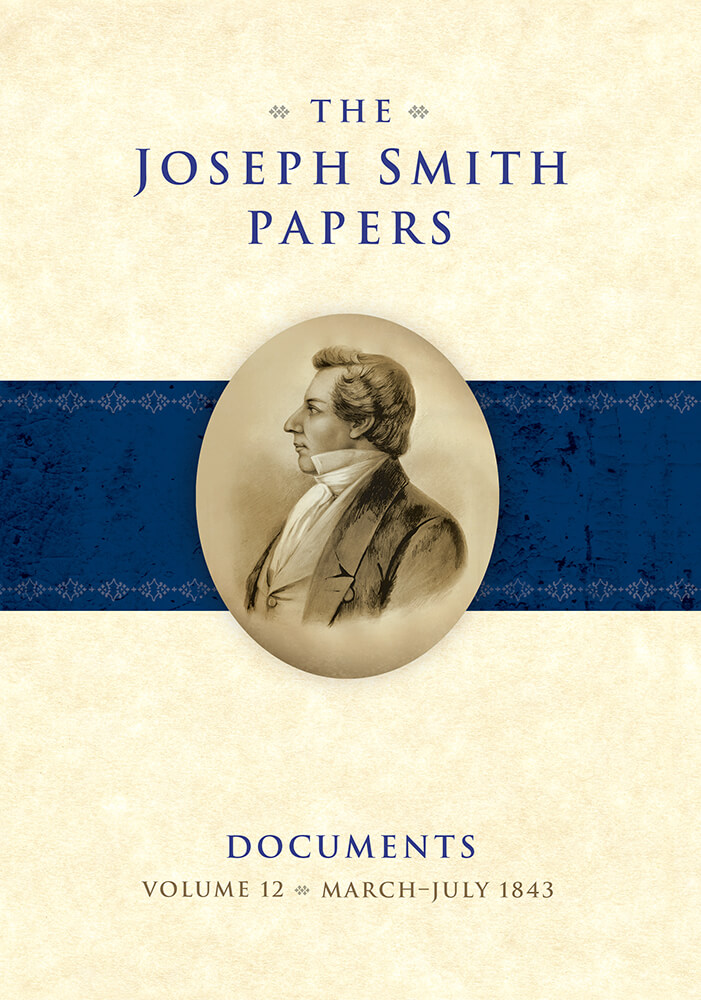
The final few years of Joseph Smith’s life reveal a man with many responsibilities: religious, familial, and civic. The editors of Joseph Smith Papers, Documents: Volume 12: March-July 1843 (D12) make that abundantly clear in their outstanding volume and give researchers the tools they need to understand better the historical contexts of antebellum America and Latter-day Saint Nauvoo. However, I also felt like I came to know Joseph Smith the person from the 96 documents organized and annotated in D12. In their introduction, they quote Joseph Smith as saying, “when a man is reigned up continually by excitement, he becomes strong & gains power & knowledge.” Smith was never content to operate in one role alone; he saw himself within communities and as a society-builder. Zion, to Smith, was the “pure in heart,” but it was also comprised of people.
Those of us at the Juvenile Instructor, like so many other in the Mormon academic community, are very sad to hear of the passing of D. Michael Quinn, and want to take a moment to honor his legacy as one of the most important historians of Mormonism. Our own Ben Park put together an excellent summation of Quinn life on this Twitter chain, but we’d also like to take a moment here to celebrate Quinn’s tremendous contribution to Mormon history.
For me, what stands out most about Quinn’s scholarship are controversy and indefatigable research. Controversy in Mormon history had been with the movement since the beginning with scholarship on Mormonism often dividing between believers and non-believers. Quinn was somewhat pioneering in tackling controversial topics as both a believer and an “insider” in his work at the church archives and at BYU. Scholars like Marvin Hill had been edgy, but Quinn fully embraced the most controversial topics and even held a kind of press conference to refute Boyd K. Packer’s 1981 “The Mantle is Far, Far Greater than the Intellect.”
The Church History Department of The Church of Jesus Christ of Latter-day Saints is looking for a historic sites curator to serve as a digital operations specialist. As a standing member of the division’s visitor experience team, this individual will assist in extending the reach of historic sites significant in Church history for a global audience.
This is a full-time position.
RESPONSIBILITIES
In order of importance. Includes percentage of time spent on each.
Mark Staker on Legacies in Mormon Studies: “Jenny was always generous in sharing her knowledge. She was not only an exceptional educator (who also taught her colleagues along the way), but she…”
Kathy Cardon on Legacies in Mormon Studies: “I worked in the Church's Historical department when Jenny was in the Museum. I always enjoyed our interactions. Reading this article has been a real…”
Don Tate on Legacies in Mormon Studies: “Very well done and richly deserved! I am most proud of Jenny and how far she has come with her life, her scholarship, and her…”

Recent Comments
Mark Staker on Legacies in Mormon Studies: “Jenny was always generous in sharing her knowledge. She was not only an exceptional educator (who also taught her colleagues along the way), but she…”
Gary Bergera on Legacies in Mormon Studies: “Jenny's great. Thanks for posting this.”
Kathy Cardon on Legacies in Mormon Studies: “I worked in the Church's Historical department when Jenny was in the Museum. I always enjoyed our interactions. Reading this article has been a real…”
Don Tate on Legacies in Mormon Studies: “Very well done and richly deserved! I am most proud of Jenny and how far she has come with her life, her scholarship, and her…”
Ben P on Legacies in Mormon Studies: “My favorite former boss and respected current historian!”
Hannah J on Legacies in Mormon Studies: “I really enjoyed this! Going to be thinking about playing the long game for a while. Thanks Amy and Jenny.”