By J StuartOctober 8, 2024
APPLY AT MHA’S SITE!
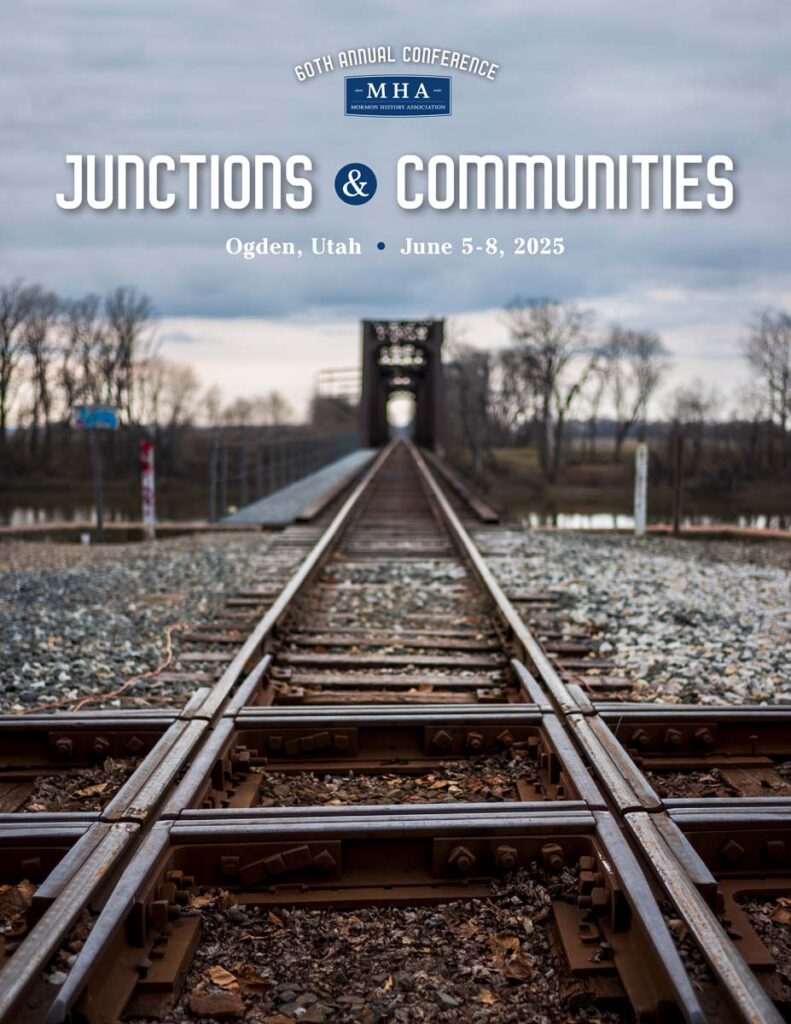
The Mormon History Association invites you to Ogden, Utah for its sixtieth annual conference to be held June 5-8, 2025. Situated on the Ogden and Weber Rivers near where they join the Great Salt Lake, and nicknamed “Junction City” when it became the connecting point between numerous railroad lines, Ogden has long been a site of junctions. Long before Latter-day Saints dreamed of an American Zion in the Great Basin, ancestors of Shoshone and other indigenous peoples criss-crossed the region, establishing trade networks and sharing languages, settlements, and cultures.
Continue Reading
By J StuartOctober 1, 2024
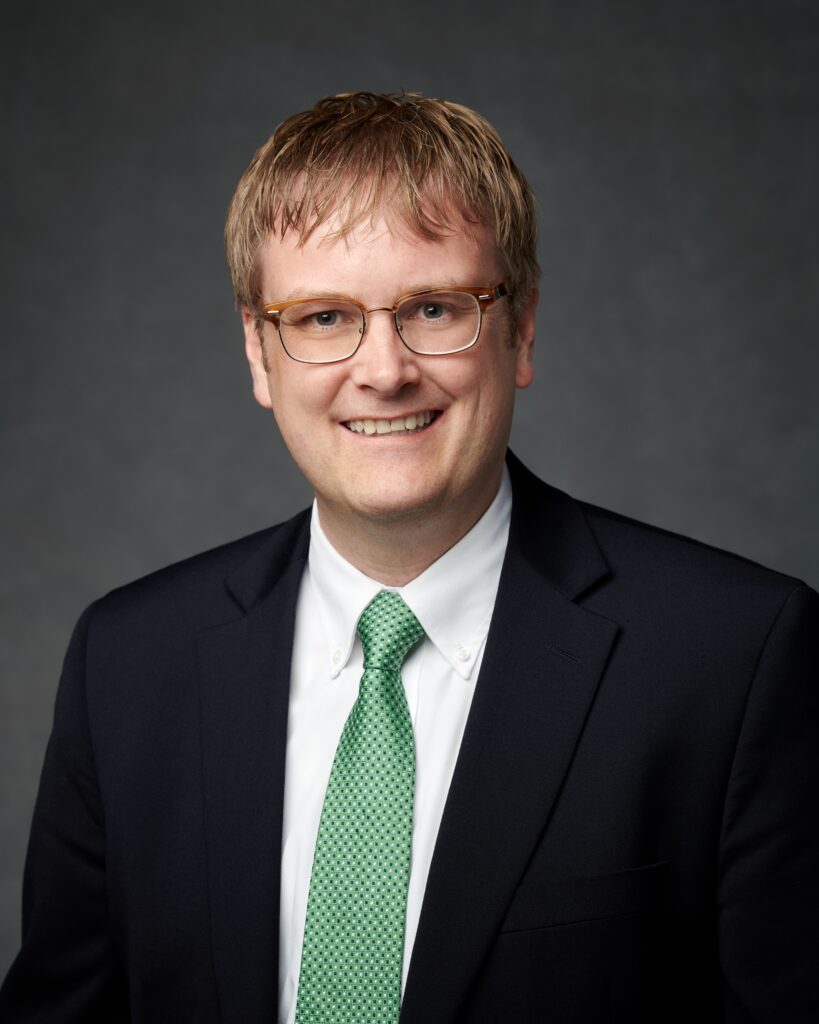
The keynote speaker for the Juanita Brooks Conference on Utah History will be Dr. Matthew J. Grow! Grow is Managing Director of the Church History Department of The Church of Jesus Christ of Latter-day Saints. In that capacity, he leads a team of history professionals who collect documents and artifacts, preserve them, and promote understanding of the Church’s past through a publishing program, a research library, a museum, and many historic sites. Grow also serves as a general editor of the Joseph Smith Papers and Saints: The Story of the Church of Jesus Christ in the Latter Days. He has published widely on Latter-day Saint history and American religious history. Grow received his PhD in American history from the University of Notre Dame.
You can read more about the Brooks Conference below:
Continue Reading
By J StuartSeptember 9, 2024
Third Annual Juanita Brooks Conference
Utah State University
April 25-26, 2025
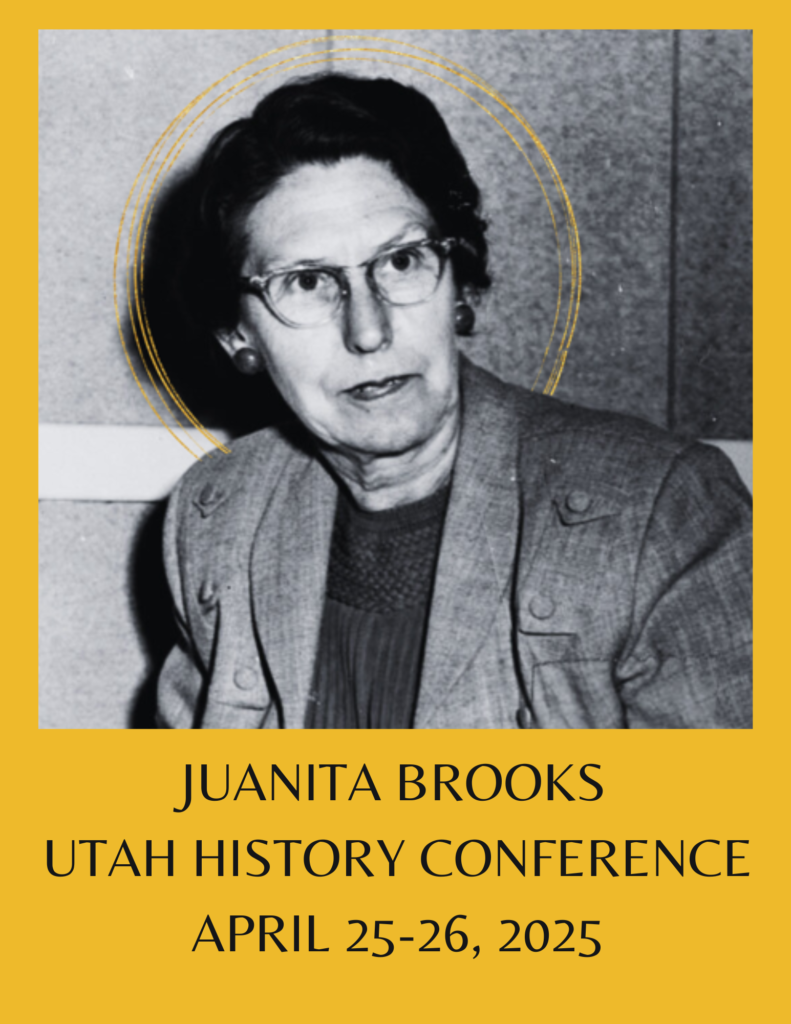
The Third Annual Juanita Brooks Conference will be held on April 25-26, 2025. Juanita Brooks wrote extensively about her family and other family relationships, biographies, as well as about southern Utah, most famously about the Mountain Meadows Massacre. We welcome papers related to Juanita Brooks’ work in southern Utah and its surrounding Mormon communities. The program committee invites scholars young and old, local and global, to investigate all aspects of these themes:
Continue Reading
By J StuartSeptember 3, 2024
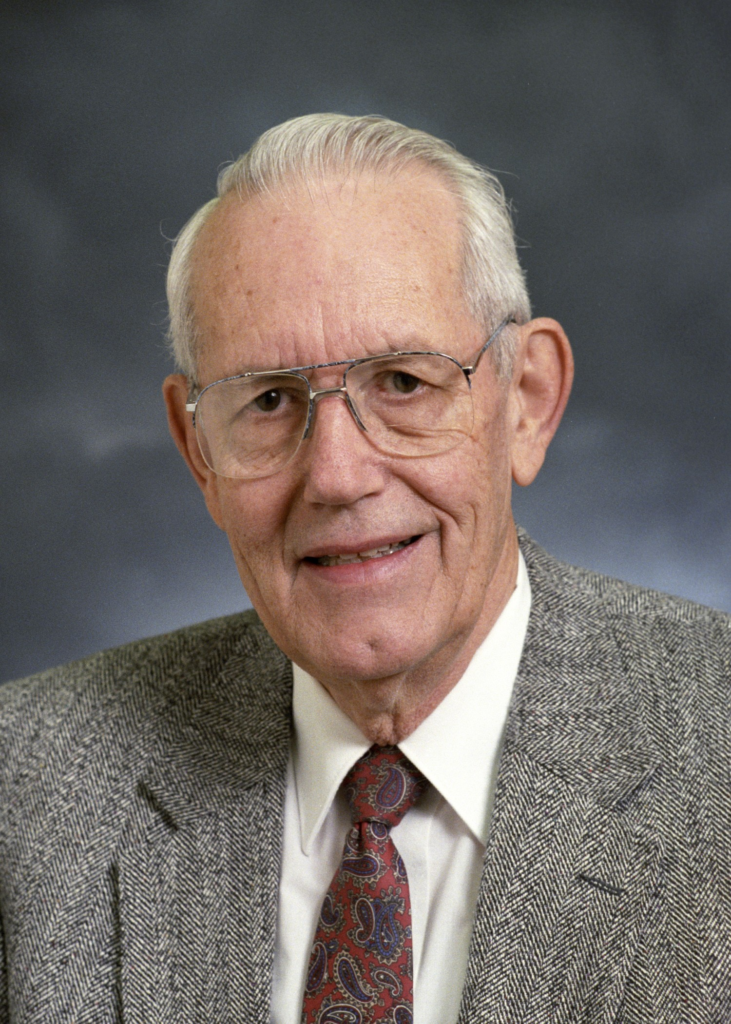
James “Jim” B. Allen passed away at ninety-seven on Sunday, September 1, 2024. He’s perhaps best known in Mormon history circles for his service as Assistant (LDS) Church Historian, his co-authorship of The Story of the Latter-day Saints with Glen M. Leonard, and his work on nineteenth-century British Latter-day Saints. His influence is also seen in the thousands of students he taught in BYU’s religious education and history departments and the dozens of students he mentored who became professional historians.
We at JI send our condolences to his loved ones. May we be the types of teachers and mentors that Jim showed us we could be.
____________________________________________________________________________________
Brief biography from Jay H. Buckley, Director of the Charles Redd Center for Western Studies at BYU in the book A Golden Jubilee History: The Charles Redd Center for Western Studies at Brigham Young University, 1972-2022 (Provo: BYU Redd Center, 2022).
James B. Allen
James “Jim” B. Allen was born in Ogden, Utah, in 1927. His early years were spent in Star Valley, Wyoming, and in Logan, Utah, where he graduated from high school in 1945. He then served three years in the US Navy and two years as a Latter-day Saint missionary in California. He graduated from Utah State University in 1954, received a master’s degree from BYU in 1957, and received a PhD in history from the University of Southern California in 1963.
Allen began his professional career in the Church Education System in 1954. He served as a seminary teacher, a seminary coordinator, an Institute of Religion teacher, and director of the Institutes of Religion in Long Beach and San Bernardino, California. In 1963, he became a member of the religion faculty at BYU, and the following year he joined the history department. In 1972, he was appointed Assistant Church Historian under newly appointed Church Historian Leonard J. Arrington. For the next seven years, he spent half his time in that capacity and the other half at BYU. After returning full time to BYU, he served as chair of the history department from 1981 to 1987, after which he was appointed the Lemuel Hardison Redd Jr. Chair in Western American History. He held this chair until his retirement from BYU in 1992.
To Allen, the term “retire” did not mean “quit.” He was soon appointed as a senior research fellow in the Joseph Fielding Smith Institute for LDS History, where he served for a short time on the institute’s executive committee. He continued his association with the institute until it was disbanded in 2005. For nearly twenty years after his retirement, he continued to teach an independent study course for BYU.
Throughout his career, Allen has authored, co-authored, or co-edited seventeen books and monographs; around ninety articles, mostly related to Latter-day Saint church history; and numerous book reviews in professional journals. He has received several prizes and awards for his work, including, the prestigious David Woolley Evans and Beatrice Cannon Evans Biography Award in 1986 for Trials of Discipleship: The Story of William Clayton, A Mormon (republished in 2002 as No Toil nor Labor Fear: The Story of William Clayton). In 1984 he was named Distinguished Faculty Lecturer at BYU. He has also received several “best article” awards given annually by various historical associations, and in 1988, he was named a fellow of the Utah State Historical Society. In 2008, the Mormon History Association gave him the Leonard J. Arrington Award for a Distinctive Contribution to the cause of Mormon History.
Among Allen’s most well-known publications, in addition to Trials of Discipleship, are The Story of the Latter-day Saints (with Glen M. Leonard, Deseret Book Company 2d ed., 1992) and Men with a Mission: The Quorum of the Twelve Apostles in the British Isles, 1837–1941 (with Ronald K. Esplin and David J. Whittaker, Deseret Book Company, 1992). He was also the major author-compiler of Studies in Mormon History, 1830–1997: An Indexed Bibliography (with Ronald W. Walker and David J. Whittaker, University of Illinois Press, 2000). This remarkable bibliography, which took Allen over sixteen years to compile, was heralded by the Mormon History Association and historians in general as the most valuable tool yet for students of Latter-day Saint history. In 2001 he received a special citation from the Mormon History Association for his work on the project. Working with J. Michael Hunter of the BYU library, Allen continued to update the bibliography database, though eventually Hunter continued that work himself. The database is now online at mormonhistory.byu.edu and smh.lib.byu.edu.
Allen is also a co-author, with Walker and Whittaker, of Mormon History (University of Illinois Press, 2001), a study of the history of historical writing about the Church. His latest book is Still the Right Place: Utah’s Second Half-Century of Statehood, 1945–1995 (Provo and Salt Lake City: Charles Redd Center for Western Studies and the Utah State Historical Society, 2016). In addition, he has reviewed several volumes of the highly important Joseph Smith Papers for BYU Studies Quarterly.
Allen is married to the former Renée Jones, and they live in Provo, Utah. They are the parents of five (one deceased), grandparents of twenty-one (two deceased), and great-grandparents of twenty-three. From 1999 to 2000, the Allens served a full-time mission at the Boston Institute of Religion. From January to April 2002, they lived in Laie, Hawaii, where Allen taught on a volunteer basis in the history department at BYU–Hawaii. They have both been highly active in The Church of Jesus Christ of Latter-day Saints, serving in many capacities, including leadership positions. From January 2004 until January 2013, they served as officiators in the Mt. Timpanogos Temple. Now, much of Allen’s available time is taken up with working on his personal and family history.
Selected Bibliography
Allen is the author, co-author, or co-editor of thirteen books and nearly one hundred articles.
Allen, James B. The Company Town in the American West. Norman: University of Oklahoma Press, l966.
Allen, James B. and Richard O. Cowan. Mormonism in the Twentieth Century. Provo: BYU Press, l964; revised edition, l967.
Allen, James B. and Marvin S. Hill, eds. Mormonism and American Culture. New York: Harper & Row, l972.
Allen, James B. and Thomas G. Alexander, eds. Manchester Mormons: The Journal of William Clayton, l840–l842. Salt Lake City: Peregrine Smith, Inc., l974.
Allen, James B. and Glen M. Leonard. The Story of the Latter-day Saints. Salt Lake City: Deseret Book Company, l976; 2nd ed. updated and revised, 1992.
Allen, James B. and Thomas G. Alexander. Mormons and Gentiles: A History of Salt Lake City. Boulder, CO: Pruett Press, 1984.
Allen, James B. Trials of Discipleship: The Story of William Clayton, A Mormon. Urbana: University of Illinois Press, 1987. Revised and republished: No Toil Nor Labor Fear: The Story of William Clayton. Provo, UT: BYU Press, 2002.
Allen, James B., Ronald K. Esplin and David J. Whittaker. Men with a Mission: The Quorum of the Twelve Apostles in the British Isles 1837–1840. Salt Lake City: Deseret Book, 1992.
Allen, J. Michael and James B. Allen. World History from 1500. New York: HarperCollins, 1993.
Allen, James B., Jessie Embry and Kahlile Mehr. Hearts Turned to the Fathers: A History of the Genealogical Society of The Church of Jesus Christ of Latter-day Saints. Provo, Utah: BYU Studies Monograph Series, 1995.
Allen, James B., Ronald W. Walker and David J. Whittaker. Studies in Mormon History, 1830–1997: An Indexed Bibliography. Urbana: University of Illinois Press, 2000.
Allen, James B., Ronald W. Walker and David J. Whittaker. Mormon History. Urbana: University of Illinois Press, 2001.
Allen, James B. Still the Right Place: Utah’s Second Half-Century of Statehood, 1945–1995. Provo and Salt Lake City: Charles Redd Center for Western Studies and Utah State Historical Society, 2016.
By J StuartAugust 15, 2024
See full CFP at bottom of post
The Church History in the Pacific and Asia Conference (CHPAC) is a joint effort between the BYU-Hawaii Faculty of Religious Education and Faculty of Culture, Language, & Performing Arts. CHPAC encourages scholars and amateur historians alike to research, preserve, and disseminate the history of the Church of Jesus Christ of Latter-day Saints in the Pacific and Asia. The CHPAC provides a venue for presentations of that research and CHPAC committee members develop and pursue opportunities to publish and disseminate said research to a broader audience.
The 2025 conference will focus on places of gathering and refuge for Latter-day Saints in Asia and the Pacific.
Continue Reading
By Steve FlemingAugust 13, 2024
So as part of this larger series (1, 2, 3, 4) I started a while back on this blog about what I see as scholarly principles, I was thinking of eventually getting to the question of the Book of Mormon’s historicity.
Often when dealing with religious history, there is a (debated) school of thought that scholars should bracket out supernatural truth claims. But as often noted, the Book of Mormon isn’t wholly transcendent: Smith claimed it came from a a physical object that a handful of people claimed to have seen and touched, and Smith said it was the source of a translation claiming to be about ancient history in the Americas.
Both such claims (plates and historical record) are intrusions from the purely transcendent in the physical world, and both of these intrusions do allow for historical examination.
Continue Reading
By J StuartJuly 18, 2024
Job Title: History – CFS Professional (Family History/Genealogy)
Job Classification: CFS – Professional; this position is for CFS-track but may be filled by a visitor.
Posting close date: October 1, 2024
Start date of this position: August 25, 2025
Required Degrees and Certifications:
- PhD in History or closely-related field must be completed by the start date
- AG (Accredited Genealogist) or CG (Certified Genealogist) must be earned prior to CFS
Continue Reading
By RobinJune 24, 2024
Beginning in 1835, members of The Church of Jesus Christ of Latter-day Saints began spreading information about their doctrine and practices through pamphlets. Through this medium, members proselytized, shaped public opinion, proved doctrine, made the case for the Church in society, and shaped Latter-day Saint thought—in short, pamphlets gave Latter-day Saints a voice.
Continue Reading

Recent Comments
Glen Larson on CFP: Book of Mormon: “Please add me to your mailing list. Thanks”
Mark Staker on Legacies in Mormon Studies: “Jenny was always generous in sharing her knowledge. She was not only an exceptional educator (who also taught her colleagues along the way), but she…”
Gary Bergera on Legacies in Mormon Studies: “Jenny's great. Thanks for posting this.”
Kathy Cardon on Legacies in Mormon Studies: “I worked in the Church's Historical department when Jenny was in the Museum. I always enjoyed our interactions. Reading this article has been a real…”
Don Tate on Legacies in Mormon Studies: “Very well done and richly deserved! I am most proud of Jenny and how far she has come with her life, her scholarship, and her…”
Ben P on Legacies in Mormon Studies: “My favorite former boss and respected current historian!”