By CristineSeptember 16, 2013
Is this really a post about material culture? I started out thinking it would be, but I suppose it hasn’t really ended up that way as I’m not analyzing the ways in which the makers or users of these objects physically interact with them. Yet I think there’s something significant in the fact that the Mormon beehive is such a substantial physical presence, both as it is materially incorporated into so many Mormon sites and as it appears in so many of the mundane physical assertions of state power in Utah. Perhaps I’m grasping at straws in an effort to anchor myself to our monthly theme here at JI ? I’ll leave it for the readers of this post to decide!
I?ve always been a very visual person, and I take great delight in quizzing myself and the people around me on the people and pictures that we encounter in our everyday lives. I?m told it?s something of a trial to watch any BBC production with me, as every time a new character appears on screen I immediately give my fellow viewers a brief history of the actor?s previous performances and explain how their previous roles are being used to shape the audience?s reaction to the current character. (This might explain why my husband often chooses to go do something else when I turn on Masterpiece Theatre….) I do the same thing with Disney movies, and I also delighted, when I worked for the Disney Store in college and made frequent excursions to Orlando, at finding the ?hidden Mickeys? that Disney incorporates into designs all over its theme parks. It?s a shame Dan Brown isn?t better at what he does ? I?m a big fan of finding and analyzing hidden symbols… when they?re well hidden (or at least unnoticed or misunderstood by many) and worth finding anyway.
So imagine how much fun I have with the many not-so-hidden but all-too-overlooked symbols I have learned through my study of the Latter-day Saints (as evidenced here by the fact that all of the pictures below are mine, unless otherwise noted).
Continue Reading
By Edje JeterSeptember 15, 2013
For this month?s discussion of material culture I want to contribute an example of a (presumed) Mormon giving Book-of-Mormon names to flowers. Daylilies are a common (at least the in US) landscaping flower that can be hybridized to create cultivars with a wide variety of colors and shapes. The American Hemerocallis Society?s Online Daylily Database has 75,000 entries, a few dozen of which come from RJ (Jack) Roberson. About thirty of Roberson?s cultivars have Mormon names. [1]
Continue Reading
By Ryan T.September 15, 2013
Welcome to this installment of Mormon Studies Weekly Roundup!
To the news:
This week brings formal tidings from the University of Virginia of Kathleen Flake?s appointment as the inaugural Richard Lyman Bushman Chair of Mormon Studies in UVA?s Department of Religious Studies, a development that we celebrated and discussed with her a week ago. The news must have piqued some broader interest as well, because the appointment also was noted in the New York Times.
Some items of interfaith and ecumenical interest. At the Washington Times, Mark Kellner highlighted the recent work of Stephen H. Webb, until recently a professor of religion and philosophy at Wabash College. Webb?s new book Mormon Christianity: What Other Christians Can Learn From the Latter-day Saints, which is now available from Oxford University Press, professes to take ?Mormon theology seriously from an outsider’s perspective, arguing persuasively that Mormons are a part of the Christian family tree, and that their doctrine offers valuable insights and alternatives to traditional Christianity.? It?ll be interesting to see whether the book is a bombshell in the Christian community. Meanwhile, the Deseret News drew attention this week to comments of Rt. Rev. Scott B. Hayashi, Episcopal Bishop of Utah, condemning ?anti-Mormon humor.?
Continue Reading
By Mees TielensSeptember 14, 2013
Last year, for the annual summer seminar on Mormon culture, I wrote a paper on the gold plates in the popular imagination. It was one of the most fun papers I’ve ever had cause to write (and I’m in cultural studies, so I get to write about a lot of fun stuff). For today’s quick Saturday post, I wanted to share with you some of the images I found.[1]
Continue Reading
By GuestSeptember 13, 2013
Michael J. Altman received his Ph.D. in American Religious Cultures from Emory University and is an Instructor in the Department of Religious Studies at the University of Alabama. Mike’s areas of interest are American religious history, theory and method in the study of religion, the history of comparative religion, and Asian religions in American culture. He is currently completing a book manuscript analyzing representations of Hinduism in nineteenth century America. This post originally appeared at Mike’s personal blog. He graciously allowed the Juvenile Instructor to repost it in its entirety.
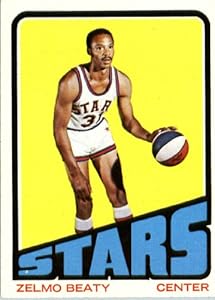 One of my favorite weekly podcasts is Slate’s Hang Up and Listen, a sports podcast that deconstructs sports media and culture with a wry wit that deflates American sports of all its self-seriousness. If sports talk radio is Duck Dynasty, Hang Up is 30 Rock.
Every week host Josh Levin signs off with the phrase “remember Zelmo Beaty.” Beaty, a basketball star in the 60s and 70s passed away recently and this past week Hang Up and Listen reminded us why we should indeed remember him. Stefan Fatsis’ obituary of Beaty opened by staking out Beaty’s importance as a pioneer for black players in professional basketball. But what caught this religious historian’s attention was the confluence of race and religion that surrounded Beaty’s move to Salt Lake City to play for the Utah Stars of the American Basketball Association in 1970.
Continue Reading
By GuestSeptember 12, 2013
Justin Bray is an oral historian at the Church History Department in Salt Lake City, Utah. He is also an MA student at the University of Utah, where he studies American religious history. He has presented and published several papers on the sacrament of the Lord’s Supper among the Latter-day Saints.
I’ve always found objects meaningful tools to reconstruct the past.
When my great-grandfather passed away many years ago, my dad inherited an old baseball bat–probably because my brothers and I couldn’t stop watching The Sandlot, and throughout our childhood we collected an unhealthy number of baseball cards. I really didn’t know anything about my great-grandfather (at the time), let alone that he was a baseball player. But the more attention I paid to the bat, the more the bat became a kind of lens into my great-grandfather’s world.
Of course every baseball player has a bat, and at first glance baseball bats all look quite similar, but every nook and cranny spoke more about this specific player. For example, the most worn part of the bat’s handle was about an inch and a half above the knob, meaning he “choked up” on it considerably. From my background in baseball, I knew that players who choked up on the bat were generally shorter, faster, and “scrappier” players looking to just get on base, so that more powerful hitters could drive them home.
The kind wood the bat was made of, the fact that no pine tar was on it, and its length and weight continued to help piece together not only the kind of baseball player my great-grandfather may have been but also how far he played professionally and in what time period his career took place. A text, such as his obituary, may have said “he played baseball,” but studying a surviving object from is athletic career added elements to his narrative that evaded the written word.
This same approach can help historians study religion in America. Men, women, and children often use objects to express their faith, like a cross, phylactery, or CTR ring.
For some time now, I’ve looked at the sacrament of the Lord’s Supper as a way in which to study the devotional lives of the Latter-day Saints. When researching this sacred ritual, texts can only say so much: “The sacrament was administered today.” But when researching objects that were used to administer the sacrament, such as bread, water, wine, linens, cloths, plates, cups, trays, flagons, hats, gloves, and tables, the narrative expands.
Take the sacramental bread, for example. In nineteenth-century Utah, you didn’t just pick up a loaf of Wonder Bread on Saturday night, nor did you begin baking bread on Sunday morning. Preparing the sacramental emblems was a process that required at least daylong time and attention. It was often baked by sisters of the Relief Society and became a meaningful part of their devotional life.
Objects can open new channels of inquiry that words alone cannot. They can generate new questions to familiar narratives. But material culture also has its limits. Objects must be studied against texts to get good glimpse into religious worlds.
For those living in or near Salt Lake City, I’d like to give a plug for Kris Wright’s lecture tonight at the Assembly Hall on Temple Square. She’ll tell you better than I can how useful material culture is in studying the Latter-day Saints.
By AmandaSeptember 11, 2013
Note: This may be the least academic post I?ve ever written. It?s mostly a collection of my random thoughts on clothing, modesty, and religious communities. Read it with that in mind.
On Sunday night, as I was flipping through TV channels, I came across Breaking Amish, a TLC reality show about young men and women who have decided to leave the Amish. There has been significant controversy surrounding the show. Although TLC claimed that all of the young men and women it was filming had been a part of the Amish when it began production, evidence emerged that they had frequented strip clubs, owned cell phones, and been involved in drunken parties. Websites like Jezebel accused the show of fabricating the lives of its participants, using makeup, clothes, and creative editing to make individuals who hadn?t been involved in the Amish community for years appear to be recent apostates. Perhaps the most interesting of their techniques was the clothes.
Like many reality TV shows, Breaking Amish has its participants reflect on recent events ? whether it be a night carousing on the town, a clandestine kiss, or, in this season, an unplanned pregnancy
Continue Reading
By Steve FlemingSeptember 10, 2013
Edward Hunter was perhaps the wealthiest convert to early Mormonism.[1] His coming to Nauvoo was a major boon to Joseph Smith as he set up a factory and brought a lot of store goods.[2] ?My wife and myself had made up our minds to let Joseph have all of our means,” Hunter wrote in his autobiography, “until Joseph came to me and said, ?Keep it.??[3] The following unsigned and undated letter seems to confirm that narrative. It seems to have been written by a dissenter who was irritated by Hunter’s consecration.
Continue Reading
By Ben PSeptember 9, 2013
(The following is a give-and-take with Christopher and Christine Blythe, graduate students in American religious history who specialize in the many divergent forms of Mormonism. Christopher attends Florida State University, where he is nearing completion of his PhD, and Christine recently started a master’s program at Memorial University of Newfoundland. A couple weeks ago, I highlighted two of their recent articles; today, they answer a few questions presented to them by the JI cabal. The Blythes have a documentary history of the succession period due to be published by Kofford Books next year.)
Continue Reading
By Edje JeterSeptember 8, 2013
 Note: this post discusses sexual activity in general and erectile dysfunction in particular, though mostly with nineteenth-century language. It also contains an image of a female nude as printed on the packaging and advertising for a late-nineteenth-century aphrodisiac pill.
Two weeks back Christopher had a socks-rocking post (with great comments) on the alleged pharmacoactive properties and Mormon uses of ?Mormon Tea.? At the moment I don?t have anything to add to the discussion of Mormon Tea, but I think there are some related, interesting things to say about damiana (see image at right), which also grows in the American Southwest, also affects human physiology, and was also allegedly part of the Mormon materia medica.
Continue Reading

Recent Comments
Glen Larson on CFP: Book of Mormon: “Please add me to your mailing list. Thanks”
Mark Staker on Legacies in Mormon Studies: “Jenny was always generous in sharing her knowledge. She was not only an exceptional educator (who also taught her colleagues along the way), but she…”
Gary Bergera on Legacies in Mormon Studies: “Jenny's great. Thanks for posting this.”
Kathy Cardon on Legacies in Mormon Studies: “I worked in the Church's Historical department when Jenny was in the Museum. I always enjoyed our interactions. Reading this article has been a real…”
Don Tate on Legacies in Mormon Studies: “Very well done and richly deserved! I am most proud of Jenny and how far she has come with her life, her scholarship, and her…”
Ben P on Legacies in Mormon Studies: “My favorite former boss and respected current historian!”