By J NelsonJuly 23, 2019
UNITED STATES | UT-Salt Lake City
ID 239568, Type: Temporary Full-Time
POSTING INFO
Posting Dates: 07/22/2019 – 08/05/2019
Job Family: Human Resources
Department: Church History Department
PURPOSES
The Church History Library is seeking a candidate for a one-year, full-time (40 hours/week) paid internship opportunity working with archivists in arranging, describing, and preparing records for digitization which are related to the history of The Church of Jesus Christ of Latter-day Saints and its members.
RESPONSIBILITIES
- Process archival records in paper, audiovisual, and/or electronic form.
- Participate in intake activities of newly acquired collections.
- Create finding aids using the EAD register and rendering tool.
- Assist in preparing paper and electronic records for digital preservation.
- Assist in workflow management of records from acquisitions and processing to digitization and storage.
- Review/edit cataloging work of others.
- Develop expertise with the cataloging system to capture descriptive metadata, adhering to internal and professional standards.
- Contribute to a collegial and professional atmosphere that incorporates the highest standards of behavior and cooperation, promoting teamwork and group purposes.
QUALIFICATIONS
- Required: Bachelor’s degree in history, humanities, or related field
- Preferred: Master’s (earned or in process) in archival studies, library science, or history
- Understanding of archival theory and practices
- Proficient in Microsoft Office suite
- Strong organizational and time management skills
- Highly detail-oriented with excellent writing and editing skills
- Willingness to dress and present oneself appropriately
- Experience teaching and/or training (in any setting)
- Knowledge of the historiography and sources of Church history
- Proficiency in working both independently and in a team setting
- Experience conducting research and/or working in an archive, including arranging and describing archival collections
WORTHINESS QUALIFICATION
Must be a member of The Church of Jesus Christ of Latter-day Saints and currently temple worthy.
POSTING NOTICE/MORE INFO.
Please Note: All positions are subject to close without notice.
Find out more about the many benefits of Church Employment at http://careers.churchofjesuschrist.org.
By Steve FlemingJuly 12, 2019
So Universal Theosophy having recently put Thomas Taylor’s 1804 translation of Plato’s works online has made it a whole lot easier to go through the edition of Plato’s works that would have been available in Joseph Smith’s day. I’ve argued that Smith seemed to have used Taylor’s translation, but I was still surprised to have just discovered the striking similarities between certain passages in Smith’s 1832 account of his First Vision and Taylor’s translation of Plato’s cave allegory from the Republic, especially lines 515 to 517. As I argued last year that Smith seemed to have drawn on the passage just after this for the description of Christ in the Olive Leaf revelation (which he dictated the same year), I do see these similarities as evidence that Smith read, knew, and used Plato. And that fact that Plato showed up so prominently in this earliest account of this founding event, I would argue, is a very big deal.
Here’s a write up that I just put together.
Continue Reading
By C TerryJuly 8, 2019
This post will focus on digitized periodicals and publications available through Utah archives related to Mormon history. All of these sources are very helpful for doing research, both in the nineteenth and twentieth centuries. The Church of Jesus Christ of Latter-day Saints in particular has a rich history of magazines, though many of these magazines ended in 1970 with the push towards correlation and consolidation. Even though this post is focused on publications, I will also include a few other helpful links and materials. Before I get going, I want to express my gratitude to all the archivists and employees at so many archives who worked to make this material available. These are such rich sources, and being able to access so many remotely is just awesome. And it wouldn’t be possible without all the labor these people put in.
Continue Reading
By Jeff TJuly 5, 2019
The Joseph Smith Papers Documents, Documents 5: October 1835-January 1838 provides an in-depth series of sources relating to building of the Kirtland Temple, economic collapse related to the Kirtland Anti-Banking Society, the expulsion of Mormons Missouri, and religious dissent. In this post, I’d like to highlight how a teacher might use documents from this volume in a broader American History class.[1]
Continue Reading
By J NelsonJuly 4, 2019
Quincy Newell’s biography of Jane Manning James is a significant and important piece of scholarship, not only for the field of Latter-day Saint history, but also for African American, women’s, Western, and the larger field of American religious history. Newell carefully takes readers through these histories and shows how Jane’s life connects all of them. This is a critical aspect of Newell’s methodology because even though Jane’s life is fairly well-documented, scholars must necessarily rely on the historical context of Jane’s life to help tell her story. Fortunately for her readers, this is something that Newell excels at. As J Stuart pointed out in an earlier round table post, Newell uses words like “perhaps” and “likely” when describing possible interpretations of the events in Jane’s life rather than imposing her own narrative. Indeed, Newell’s work serves as an example of how historians should approach subjects with limited documentary evidence while still connecting that subject to wide historical developments.
One of the merits of Newell’s work is that she provides us a view of Mormonism through Jane’s life, which in and of itself is a “history of Mormonism from below” (pg. 135). Mormon history has been told and retold through the lives and tenures of its leaders—important white males—and by subverting that structure, Newell illuminates the lived religious experience of an African American woman who made the Church of Jesus Christ of Latter-day Saints her religious home in spite of all that she went through. This “from below” approach encourages research centering on how women of any and all races participated in Mormonism from the nineteenth century to the present. As Newell and others have demonstrated, scholars are only beginning to scratch the surface of Latter-day Saint history that incorporates source content created by women, particularly as it relates to women of color.
Newell’s Your Sister in the Gospel is not the final word on Jane’s story. Instead, it is a foundational monograph for future studies on other Latter-day Saints who were not in powerful leadership positions and whose experience as a member of the church was impacted by their race and gender. Indeed, the appendices included in the back of the book (including two patriarchal blessings) make it more of an initiative or starting point than an exhaustive conclusion. It’s fair to say that Newell hopes that these primary sources will help other scholars interested in black Latter-day Saints in the nineteenth century and that scholars in other fields will benefit from the eased accessibility of these documents.
In the epilogue, Newell briefly mentions how Jane has been remembered by Latter-day Saints in the last few decades and especially in the last three years. Jane is a very interesting historical subject, but so is her legacy and the narratives that are claimed and told (or performed) about her at certain moments in time. I’m particularly intrigued by the possibilities for studies on the memory of Jane and how both black Latter-day Saints and the church at large have utilized her connection to the life of Joseph Smith and early church history. Your Sister in the Gospel provides a sound historical basis for such studies and will inform further memory projects about Jane in the future. And in its own way, Newell’s book is as much a presentation of historical research as it is a part of the zeitgeist in Mormon studies and more recent popular trends in Latter-day Saint culture. This timely biography of Jane Manning James succeeds in informing and participating in current memory-making developments.
By J StuartJune 28, 2019
UNITED STATES | UT-Salt Lake City
ID 237835, Type: Regular Full-Time
POSTING INFO
Posting Dates: 06/28/2019 – 07/12/2019
Job Family: Library, Research&Preservation
Department: Church History Department
PURPOSES
The Church History Department announces an opening for a historian/writer with an emphasis on the global history of The Church of Jesus Christ of Latter-day Saints. Duties will include researching and writing, in collaboration with others, histories of the global Church for both scholarly and member audiences.
RESPONSIBILITIES
Continue Reading
By Hannah JungJune 26, 2019
This is the third post in a roundtable on Quincy D. Newell’s Your Sister in the Gospel: The Life of Jane Manning James, a Nineteenth-Century Black Mormon (Oxford University Press, 2019). Find the first and second here
Newell knows the value of a good story, but she is also wary of the simplistic historical messages that such stories send. Newell is critical of the scholars of religious history who tell only the liberatory story of Biddy Mason*, an African American woman who sued and won her freedom in a California court, and not that of Jane Manning James who repeatedly and unsuccessfully petitioned white male church leaders to receive her temple endowments. Newell critiques this absence in the historiographical record but she is also wary of the narratives that do get told about Jane. In the post-1978 era, after the Church of Jesus Christ of Latter-day Saints lifted the temple and priesthood ban on its black members, historians and members alike have searched for racial diversity in the Church’s beginnings. They have resurrected Jane’s story because it highlights this diversity and, more importantly, because it shows her close interactions with the movement’s founder, Joseph Smith. Newell is, however, also unsatisfied with these narratives. She writes:
as a scholar of American religious history, I often find these popular representations of Jane James deeply discomfiting. The stereotypes of blackness, the “traditional” constructions of femininity, and the selective presentations of fact that they employ make me squirm. They flatten Jane’s experience, tidying up the messiness of her life. (4)
Newell’s book therefore serves as a counter to this easy narrative about Jane. It is the anecdote to excluding Jane from the historical record and to over-simplifying Jane.
Continue Reading
By JJohnsonJune 25, 2019
This is the second post in a roundtable on Quincy D. Newell’s Your Sister in the Gospel: The Life of Jane Manning James, a Nineteenth-Century Black Mormon (Oxford University Press, 2019). Read the first post here. (I would alternately title it—Perhaps, Perhaps, Perhaps—if anyone out there needed a Cake reference.)
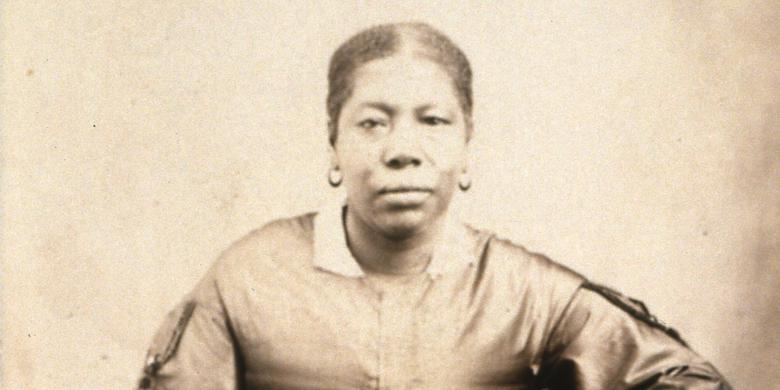
There is much to appreciate in Quincy Newell’s new biography of Jane Manning James. She has masterfully fleshed out an illuminating and complex narrative of a paradoxical life marked by documentary absence more than presence, more atypical than common. Quoting what was perhaps Jane’s final plea for participation in temple rites to Joseph F. Smith—Latter-day Saint church president, the title offers the motivating paradox
Continue Reading
By J StuartJune 23, 2019
This is
the first post in a roundtable on Quincy D. Newell’s Your
Sister in the Gospel: The Life of Jane Manning James, a Nineteenth-Century
Black Mormon (Oxford University Press,
2019). Look for more posts in the coming week!
Quincy Newell’s biography of Jane Manning James is a concise, informative study of one of the best-known Latter-day Saints of African descent. It is not the first study, nor the last, to examine Jane’s life and faith.[i] Born a free woman in Connecticut and buried a free woman in Salt Lake City, Jane James’ experiences are a crucial part of any study of Mormonism and people of African descent. Newell notes in the introduction that Jane’s life is “comparatively well-documented…she left multiple accounts narrating her personal history, some of which were published during her lifetime, and she appears in many other sources, including other people’s diaries, meeting minutes, and church and government records” (1). Despite the presence of these sources, many parts of Jane’s life remain mysterious to historians.
For all the words left behind by Jane, or about Jane, two words
repeatedly used by Newell stick out to me.
“Likely.”
“Perhaps.”
Continue Reading
By Jeff TJune 14, 2019
“The techno-revolution has begun! Soon, robots will scour women’s words and discover the truth about everything.” Or, at least, that’s what I imagine Brigham Young would have said if he had read the University of Utah’s Digital Matters Lab and BYU’s Office of Digital Humanities’ preliminary report on topic modeling the Woman’s Exponent. Sounds like something he’d say.
The “Quick and
Dirty Topic Model” is a sneak-peek at a larger project that will be released
with Better Days 2020, which is
the sesquicentennial celebration of women’s suffrage and the centennial of the
19th Amendment. It sounds like the results of the later slow and thorough
topic model will be released in a digital and explorable format with the Better
Days celebrations.
Continue Reading
Newer Posts |
Older Posts

Recent Comments
Mark Staker on Legacies in Mormon Studies: “Jenny was always generous in sharing her knowledge. She was not only an exceptional educator (who also taught her colleagues along the way), but she…”
Gary Bergera on Legacies in Mormon Studies: “Jenny's great. Thanks for posting this.”
Kathy Cardon on Legacies in Mormon Studies: “I worked in the Church's Historical department when Jenny was in the Museum. I always enjoyed our interactions. Reading this article has been a real…”
Don Tate on Legacies in Mormon Studies: “Very well done and richly deserved! I am most proud of Jenny and how far she has come with her life, her scholarship, and her…”
Ben P on Legacies in Mormon Studies: “My favorite former boss and respected current historian!”
Hannah J on Legacies in Mormon Studies: “I really enjoyed this! Going to be thinking about playing the long game for a while. Thanks Amy and Jenny.”